

Casino games have been part of my professional life for years, but what keeps me interested isn’t simply gambling itself. I’m fascinated by the business, psychology, mathematics and product development behind the games.
The online casino industry is unusual in that thousands of games compete for attention inside essentially the same digital storefront. New titles arrive every week, yet some games remain popular for a decade or longer. Others explode almost overnight before disappearing just as quickly.
Why does one slot become a global phenomenon while another, technically similar game, barely gets noticed?
That question is what makes casino games so interesting to me.
Casino games are products competing for attention
I tend to look at casino games much in the same way as I look at other digital products. A slot needs to attract attention, communicate what it is within seconds and then give the player a reason to return. Theme, mathematics, volatility, sound, animation, bonus mechanics and even the appearance of the game tile can influence its performance.
And competition is enormous.
A player opening an online casino might have access to several thousand games. The majority will never receive more than a passing glance. Getting someone to click a particular game is therefore already a product-design challenge before the first spin has even taken place.
This is one reason I’ve become increasingly interested in casino-game data. Looking at distribution, lobby positioning, player interest and regional differences can reveal patterns that aren’t obvious simply from playing the games.
Why do certain games become huge?
There isn’t one formula for creating a successful casino game. Some titles become popular because they introduce a mechanic players haven’t seen before. Others succeed because they’re exceptionally simple.
Then there are games where the theme becomes almost as important as the gameplay.
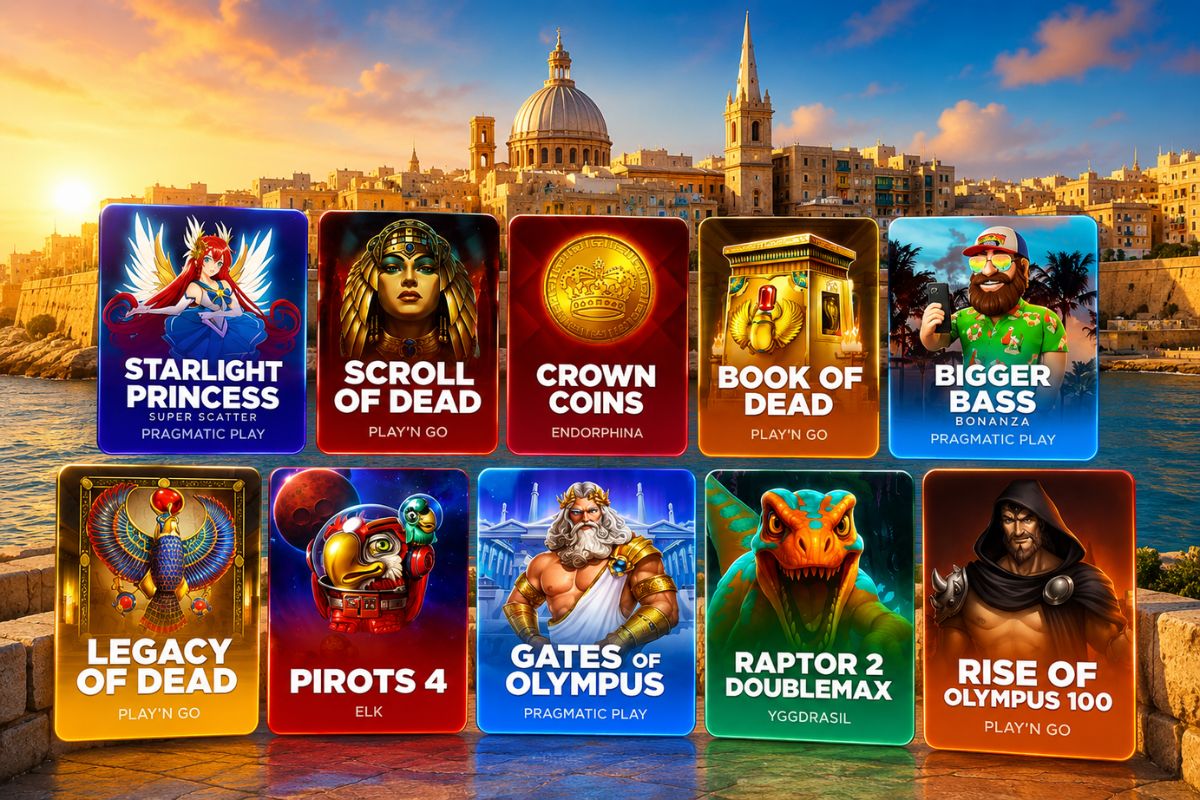
Pragmatic Play provides some obvious examples. Gates of Olympus, Sweet Bonanza and Big Bass have grown beyond individual releases into recognizable game franchises. The same applies to several long-running titles and series from other major studios.
Once players recognize a game instantly, the supplier has something extremely valuable: an established piece of casino IP.
That’s why we now see sequels, Megaways adaptations, upgraded versions, seasonal editions and other variations of successful games. Launching a completely new concept requires building recognition from zero. Extending an existing hit doesn’t.
The mathematics behind slots is another fascinating area
From the outside, two slots can look remarkably similar while offering completely different experiences.
RTP receives much of the attention from players, but volatility can have an equally significant impact on how a game actually feels.
A lower-volatility game might produce smaller wins relatively frequently. A highly volatile game can contain long periods where very little happens, followed by occasional sequences with considerably greater potential.
Then there are mechanics such as multipliers, cascading reels, expanding wilds, cluster pays, progressive jackpots and bonus buys.
What interests me is how developers combine these mathematical characteristics with entertainment.
A game can’t simply have attractive graphics. The underlying mathematics needs to create anticipation.
The best casino games aren’t necessarily the newest
The casino industry is obsessed with new releases. Providers need them. Operators need fresh content for their lobbies. Affiliates write about them. Players constantly see “New Games” sections.
Yet some of the industry’s biggest titles aren’t particularly new.
That tells us something important about casino-game development: longevity is arguably a better indication of success than launch-week attention. A game that remains prominent across hundreds of casino sites several years after release has achieved something difficult. It has survived thousands of competing launches.
When I’m researching the best casino games, this is one of the areas I find particularly interesting. Rather than looking exclusively at what has just been released, I like comparing established games, emerging titles, different providers and the games gaining traction across individual markets.
The most interesting question isn’t always “What’s new?” Sometimes it’s “Why is this game still here?”
Casino preferences differ enormously between countries
This is probably one of the areas of casino gaming that fascinates me most. There isn’t really such a thing as one universal casino player.
A game that dominates in Finland might perform very differently in the UK, Germany, Brazil or Canada. Certain providers have exceptionally strong recognition in particular countries, while barely registering elsewhere.
Germany is an interesting example because traditional brands and game styles have historically played an important role. Nordic markets can behave differently again. Brazil has developed into one of the most interesting markets to watch as online casino culture evolves.
This makes game data considerably more useful when it’s broken down geographically.
Instead of asking:
“What is the world’s most popular slot?”
I often think the better questions are:
“What is popular, where, and why?”
That’s a much more interesting starting point.
Casino lobbies are becoming increasingly important
The casino lobby itself is another underestimated part of the industry. Imagine a supermarket with several thousand products but room to display only a fraction of them prominently.
That’s essentially the challenge facing an online casino.
Which games appear first?
Which receive banners?
Which are included under “Popular”?
Which games are recommended to returning players?
Where does a newly released game appear?
A great casino game buried on page 40 of a lobby has a very different chance of succeeding than one placed prominently on the homepage.
This creates an interesting relationship between game quality, player demand and distribution. Popular games receive better positions because they’re popular, but those positions can then make them even more popular.
It becomes a feedback loop.
Streamers changed casino-game development
Another major change has been the rise of casino streaming. Games are no longer necessarily designed only for the person playing them. Some mechanics work extremely well when hundreds or thousands of people are watching someone else play.
Large multipliers, dramatic bonus rounds, visually obvious wins and extreme volatility can all create moments that translate well to Twitch-style streaming platforms, Kick, YouTube and short-form social media.
This has arguably influenced the visual language of modern slots. Compare many current releases with games from 15 or 20 years ago and the difference is enormous. Modern games often feel faster, louder and more event-driven.
The individual spin has become content.
Crash games added another dimension
Slots still dominate online casino libraries, but I’m also interested in the growth of crash and instant games. Crash games strip the casino experience down to something incredibly simple: a multiplier increases until it crashes.
The player immediately understands what is happening. That simplicity is powerful, particularly on mobile devices.
What’s interesting now is seeing established casino brands move between formats. A recognizable slot franchise doesn’t necessarily need to remain a slot forever. Characters and themes can potentially move into crash games, instant games and other products.
That makes casino IP increasingly interesting from a business perspective.
AI could change casino games again
The next major transformation could come from artificial intelligence. We’ve already seen AI change content production, customer service, personalization and marketing. Casino games are another obvious area where the technology could eventually have an impact.
That doesn’t necessarily mean allowing AI to dynamically change game outcomes – regulated gambling mathematics needs predictability, testing and certification.
The more realistic opportunities may initially be around production. AI can assist with concept development, artwork, animation, localization, testing and potentially the creation of personalized lobby experiences.
The economics of game development could therefore change significantly. If producing a professional-looking casino game becomes cheaper and faster, the number of releases could increase even further.
That creates an interesting paradox.
More games won’t necessarily make it easier for new games to succeed. It could make attention even more valuable.
That’s ultimately what keeps me interested
I’ve worked around the iGaming industry long enough to have seen trends come and go, but casino games remain one of the areas I keep returning to.
Partly because they’re entertainment products. Partly because they’re mathematical products.
But also because they’re businesses.
Behind every successful game sits a combination of developers, mathematicians, designers, aggregators, casino operators, account managers, marketers, affiliates and increasingly data analysts trying to understand why players choose one title instead of another.
And despite all that expertise, predicting the next truly enormous game remains surprisingly difficult.
Thousands of casino games will be released, a handful will become recognizable, and an even smaller number will still matter five or ten years later.
Understanding why those particular games survive is what makes this part of the industry so fascinating to me.